 |
This issue of Yachtyakka is collected from:







|
|
|
|
By John Welsford - Hamilton, New Zealand
|
|

|
|

|
Making a living from small boat plans is not easy, and so like all of the designers of small boats I know, I do all sorts of other things to bring in the bacon. A bit of commercial fishing boat work doing incline tests, stability calculations, and horsepower calcs. I teach yacht design at a college, do some supervision of other designers building on customers behalf, some preliminary and feasibility work for other proposals and so on. I even work in sawmills and wood processing plants doing quality control and technical consultancy work. But now and again I get something really different to do, and here is a quick look at one of those projects.
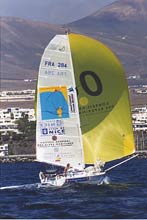
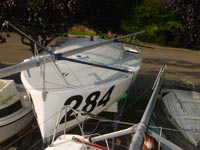
The Mini Transat race from France, singlehanded across the Atlantic in 6.5m (21 ft 4in) ultra lightweight super fast racers. This is one of the toughest races of all those in the yachting calendar, the speed of the boats is staggeringly quick, the weather often foul, the boats tiny and the distance - 4000 odd miles - means a month on board with 10 minute catnaps every hour or two, mostly dried and cold food, and very very few creature comforts. To give you an idea, my Navman design, 3rd place getter in the 1999 race, was only 4 nautical miles short of 250 miles in one 24 hour run, and made over 1500 miles in a weeks run. That’s a quick boat, averaging 1 ½ times hull speed for a week singlehanded. That’s daytimes, nighttimes, and no breaks for coffee, breakfast and a shower! Staggering stuff! The experience gained designing these “other“ projects finds its way back into the small boats that I’m better known for, and the research undertaken to design competitive extreme class boats has yielded much useful information. I raced on Navman a few times during the boat's workup period, and have vivid memories of being on the helm when closing the narrow gap between Cape Brett and Peircy Island at the southern entrance to New Zealand’s Bay of Islands at about 2am on a pitch dark howling gale night, the GPS was indicating between 18 and 20 knots as we screeched along under the small kite (only 90 sq m) and reefed main planing toward the occasional patches of white surf that I could just make out ahead. |
||
|
More here
http://www.duckworksmagazine.com/08/columns/welsford/index4.htm
|
|
By Frank Bates - Auckland, New Zealand |
|
|
|
The origins of the Mahurangi Regatta are lost in the mists of time, but an early reference to this event dates back to New Years Day in 1858, when a resident of the Mahurangi recorded the event in his diary. There are not many events in this country that can be traced back that far. (Click here for more information about Mahurangi and the Regatta). It has recently become a very popular day out, and attracts large numbers of boats and people to this beautiful area. We first attended the regatta in 2006, when we had only owned our Pathfinder Varuna for a couple of weeks, and it was a very nervous pair of would-be sailors who rigged and launched her at Scott's Landing that day. As we backed her down the ramp, a bearded gentleman stepped up, shook my hand and introduced himself as John Welsford. This year we decided we would sail up from Auckland, and we set out on Thursday morning to give ourselves a couple of days to get there. (See a map of our trip at the bottom of this page).
It was another fine sunny day, with a little bit of cloud and a light South West wind that was forecast to rise to 15 knots in the afternoon. We sailed slowly up the Rangitoto Channel in a fickle breeze, and eventually decided we would motor over to the northern tip of Rangitoto for an early lunch ashore near the lighthouse while we waited for the afternoon breezes to arrive. As we motored through the channel behind the lighthouse the wind started to pick up a little, so we returned to wind power and carried on, setting a course for the Whangaparaoa Passage about 10 miles to the north. More here http://www.duckworksmagazine.com/08/gatherings/mahurangi/index.htm
|
Latest news is that Hydroptere was moved to
its final base. It has a certified speed course. The team will, they
say, tilt
the mast upwind (as the new design allows).
There's no wind for now - but slight hopes of a solid "Mistral"
(North wind) for part of the week-end. If indeed the Mistral blows,
these guys
have dared to write that they'd "attempt to certify the 45 and 50 knots
stages".
All we have are a few photos of a couple runs so far, and an announced
instant
top speed over 46 knots. But from these guys, normally quite
conservative, I
find it quite a statement to merely say they want to "certify the 50
knot
stage", w/o any qualifying words. This does suggest a very strong
confidence, which, my guess, can only be based on data so far having
proved very
solid (among other things, high stability and still lots of lift at
46-plus
knots).
More Here
http://www.boatdesign.net/forums/showthread.php?t=15612


Name this yacht, year and speed.
Gary, you can’t play.

You starting to understand the game now Logan?
Many thanks to these Yachtyakka supporters






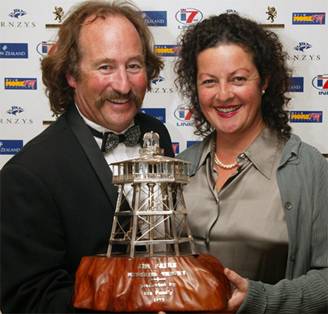
All I need now is a car
When Should Races be Abandoned?
Guest editorial by
David Howie
Editor of Crew.org.nz
This has been a bit of
a contentious issue of late, so I thought I’d ask around and see how
the clubs
and organizations handle this thorny question.
For the record I am firmly in the camp that believes the skipper is the
only
one who is in a position to decide whether to race or not, whether to
pull out
of a race or not. In fact I think that any interference with the
skipper’s
ability to make decisions (even silly rules by Customs) is detrimental
to the
safety of the boat and crew.
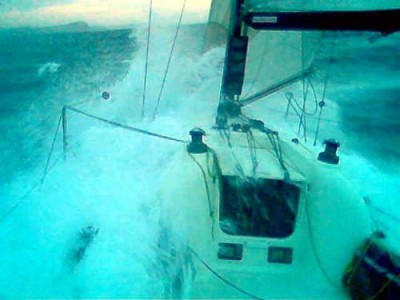
I started by talking to a number of race officers from different clubs.
I asked
them whether they had received any instructions or guidelines from
their club
or YNZ; the short answer was no. So I asked what criteria they would
use when
making the decision to abandon.
At this point, there was some variation. At one end of the scale, I
heard “we
need to protect these people from themselves”, and “I wouldn’t want a
boat to
get damaged”. At the other end, Fendall Haliburton (RAYC) told me that
for
Category 1 and 2 events—“expect a gun”. He then qualified that by
saying that
if Bob McDavitt called up and said “Don’t do it, it’s going to blow
90-100, and
people will surely die”, he’d reconsider. But he would expect these
boats to
start in 40, 50, even 60 knots.
Several race officers agreed that they would err on the side of
caution, for
fear of legal action, should the worst happen. Many mentioned that case
with
the bicycle race in the South Island. I said
to one race officer that that case had been overturned on appeal (Jim
Lott of
MNZ gave me that piece of info; I didn’t know). Said race officer made
a very
valid point that irrespective of that decision, she wouldn’t want to
put one of
her volunteers through the accompanying stress.
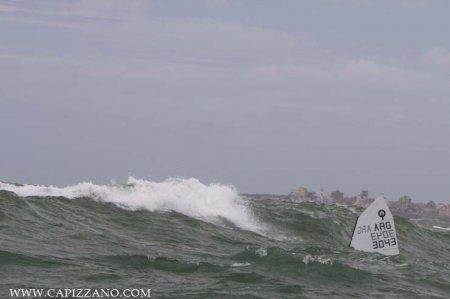
As an aside, MNZ showed very little interest in chasing down and
prosecuting
yacht club race officers. Jim was of the opinion that any legal action
would
far more likely come from the police or a victim’s family.
Next, I spoke to YNZ (thanks to Jodie, who is probably busy as hell
with the
Olympics around the corner, and in the middle of a rebuild of the YNZ
website).
Jodie supplied copies of the relevant portions of their race management
guide.
After reading all of this, and my conversation with Jim Lott, I came up
with
this: the rules and the law say the skipper is solely and inescapably
responsible. But race officers get to decide whether the race proceeds
or not.
If nothing goes wrong, fine. But if there is a drowning or serious
accident,
there will be an inquiry. The race officer will have to prove
him/herself
innocent by showing that all “reasonable” precautions were taken.
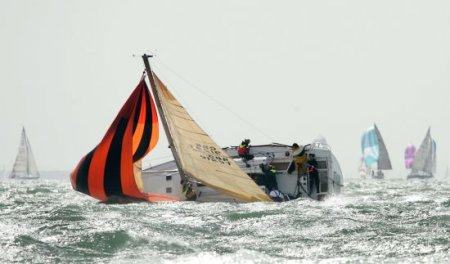
That sounds to me like Napoleonic Justice; you are guilty unless you
can prove
yourself innocent. No wonder people are being cautious, sounds like a
worse job
than club handicapper.
So I then called a lawyer friend. After I explained the situation to
him I
asked whether he would, in a commercial situation, advise a client to
enter
such an arrangement. Answer: NO.
He also explained to me that you are not technically guilty till proven
innocent, but the burden of proof is on you. This is apparently common
in
business law, but he explained that the difference there is that we
have
hundreds of years of accepted practice and precedent to follow, not the
case
with a sailboat race.
So, in the case of an accident the Race Officer needs to prove all
reasonable
precautions were taken. I tried to find out whether there was any help
on what
“reasonable precautions” might mean. Couldn’t find a thing. Lots of
information
on how to record that reasonable precautions were taken and that they
were
standard practice, but nothing on what they were. And nothing on when
to
abandon a race.
It seems the RO’s are on their own here. There’s plenty of help from
YNZ on
what factors to consider, but I was looking for something along the
lines of
the amount of carnage that’s acceptable. Should a race be abandoned if
there is
a possibility of gear damage? Should a race be abandoned if there is a
possibility of a boat being lost? Should a race be abandoned if there
is a risk
someone might drown? (It’s worth noting here that people have been
drowning off
boats since the first Neanderthal hollowed out a log, and that just
isn’t going
to change. There will always be a risk).
So, after all this talk have I changed my stance? No. I’m still
strongly of the
opinion that the only person who can make the decision to race or not
is the
skipper. Do I have sympathy for the Race Committees? Hell yes. They are
forced
to operate in a climate of fear. Fear that should a serious accident
happen
they will have to go to court and prove their innocence (my lawyer
friend
estimates upwards of $100,000 in costs whether you win or not).
But here’s what we are losing:
1) There is a risk involved every time you go aboard your boat. I like
that. It
wouldn’t be nearly so worthwhile if there was no risk. But it’s not
that big a
risk. It’s safer than driving on Auckland’s
motorways, it’s safer than fishing off rocks, and it’s safer than
playing
rugby.
2) Some boat’s crews consider high winds to be where they are most
competitive.
If you drop the upper wind speed at which you will race it’s only fair
to raise
the lower limit as well. Then we end up like the America’s Cup and
never go out. If
we lower the upper limit, designers, builders, sparmakers and
sailmakers will
take advantage of that to produce lighter construction boats (and
nobody else
will ever win a race), and the day they get caught out will be a
disaster.
3) The way to gain experience is by going out in rougher conditions
than you
have previously experienced, preferably in small increments. When I
raced with
the Auckland
keelboat fleet regularly (’74-’78) I knew that I wanted to sail long
distances
offshore. All those 150, 200 and 350 mile races were how I gained the
experience necessary. If we don’t have races in heavy air we are
denying the
current crop of sailors the opportunity to learn how to handle weather
they
will almost certainly encounter if they continue to sail offshore.
I honestly don’t know the solution. What is needed is a fundamental
shift in
the attitude of society at large. Today’s Race Officers have my
sympathy, and I
despair of what may become of our sport.
Oops
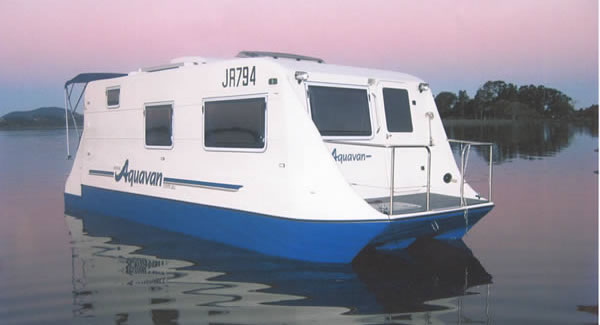

Tows on a trailer
The Sale of Aquavan includes Trademark, Website, all moulds, technical drawings and other particulars associated with it.
The Aquavan is a standard Caravan in most ways, suited to inland rivers, lakes and estuaries. The Aquavan sits on twin pontoons connected by a cavity floor: the pontoons provide the necessary flotation. The Aquavan floats off a trailer the same as any boat does. The caravan body is of sandwiched fiberglass construction with sub reinforcement throughout. There are two deck areas large enough to accommodate a couple of chairs while fishing or simply relaxing.
Security doors provide access from the decks to the interior of the craft, which is as modern as any caravan’s on the market with unique innovations. The Aquavan comprises a shower compartment, cassette toilet, hot water system, four burner stainless steel gas cooktop with grill and matching skink area, a microwave, a 12 volt 140 litre refrigerator with shelf freezer, CD/Radio/MP3/DVD Player sound system, also a TV/LCD on swivel wall mount.
Licensed to carry 6 adults and sleeping for four adults is provided by two fold out beds which can be modified to include bunks, with individual reading lights at the rear and on a breakfast table arrangement opposite the kitchen. The beds double as great sofas for daytime use with drawers for bedding storage underneath.
Each Aquavan sold has had alterations to suit the consumer.
For your opportunity to own and manufacture this fantastic product please call Bill Kain in Australia on (03) 9761 9910
Whitbread clips from the first races
Worth a look!!
“The K650 is an outcome of the relationship we have
with Karver in the AC & the Volvo and I'm very happy
with this new design. Together we once asked
ourselves what would be the sportsboat that we
would design for ourselves and after a few sketches
she was born. She combines many aspects of what
we have learnt in the Volvo Ocean Race, without the
canting keel since at this size stability is ensured by
the crew as much as the retractable foil that makes
transport very easy. She is fast but very controllable
thanks to her rudders. I cannot wait to go sailing!”
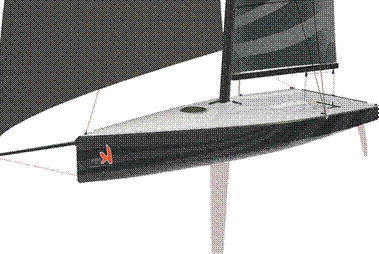
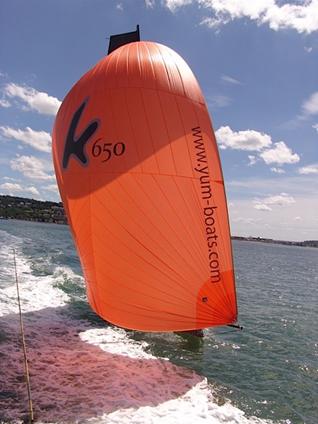
The K6.50 is made for sailors looking for new and exhilarating experience. It is easy to launch, equipped with reliable
deck gear and build for racing.
Yum Boats, the company in charge of the distribution and the class management promises a high standard full racing
calendar. 12 boats have already been ordered, of which 6 by sailing professionals.
The last but not least, of K6.50 advantages is its price: 38 900€ ( incl. french Tax )
The first K6.50 will be sailing in March 2008.

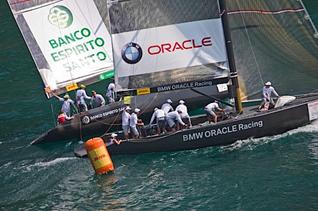
What happened to photo before this one? I can’t find it.
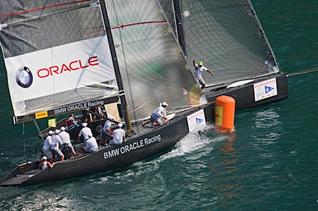
Just have this one where is the next? I e-mailed the photographer we will see if he can find it.
Could always ask the lady on the rail.
Here is another one.
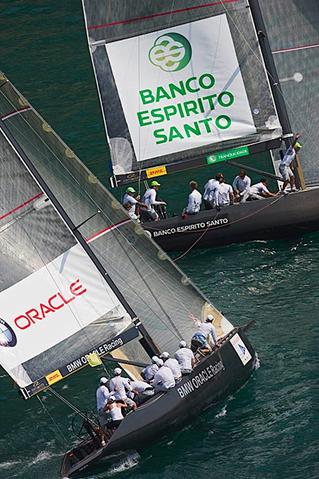
Perhaps someone can explain who has right of way and who should keep clear.
Who is riding shotgun here?
Some very interesting coverage on this site. I would love to know what they are saying. Can anybody help with a translation?
Scientists have found evidence of water on the Moon. A new analysis of volcanic glass which was recovered from the Moon during the Apollo mission of the 1970s showed that the rocks contain water molecules. The research thus challenges the notion that the Moon is absolutely dry.
|
|
|
|||||||||||||
|
|
|
|||||||||||||
|
|
|
|||||||||||||
|
|
|
|||||||||||||
|
|
|
|||||||||||||
|
|
|
|||||||||||||
|
|
|



 BREAKING NEWS


The discovery suggests that water was present in the Earth’s natural satellite when the pebbles were formed during lunar eruptions about 3.6 billion years ago.
“Most people believed that the moon was dry. People had tried to measure for 40 years and couldn't see any evidence for water ... they were not convinced we were doing something worthwhile,” said Alberto Saal at Brown University in Rhode Island, who was part of the team that did the research.
Alberto Saal other scientists of the group used a highly sensitive technology to analyze the rocks recovered during the Apollo 15 mission in 1971 and 1972. The scientists found traces of hydrogen along with chlorine and fluorine which can be found in rocks from explosive eruptions.
The discovery of hydrogen alongside other elements suggested to scientists that water came from inside the moon and not from an external source, such as a comet. Based on the amount of hydrogen found in the pebbles, scientists estimated the lunar magma contained 260 to 745 parts per million of water, similar to what is found in the Earth's upper mantle. The discovery is highly important taking into consideration future intentions to build a base on the Moon.
The finding throws at least a little water on the currently favoured hypothesis concerning the moon's origin. Many scientists think that the moon was formed when a large proto-planet slammed into Earth, sending into space molten debris that eventually became the moon. Scientists have long assumed that the heat created by the collision would have vaporised any water present and that the small gravitational field of the primeval moon would not have been strong enough to recapture the vapour.
On January 14, 2004, U.S. President George W. Bush called for a plan to return manned missions to the Moon by 2020. NASA is now planning for the construction of a permanent outpost at one of the lunar poles. The People's Republic of China has expressed ambitious plans for exploring the Moon and has started the Chang'e program for lunar exploration, successfully launching its first spacecraft, Chang'e-1, on October 24, 2007. India intends to launch several unmanned missions, beginning with Chandrayaan I in February 2008, followed by Chandrayaan II in 2010 or 2011; the latter is slated to include a robotic lunar rover. India also has expressed its hope for a manned mission to the Moon by 2030. The U.S. will launch the Lunar Reconnaissance Orbiter in 2008. Russia also announced to resume its previously frozen project Luna-Glob, consisting of an unmanned lander and orbiter, which is slated to land in 2012.
Source: agencies
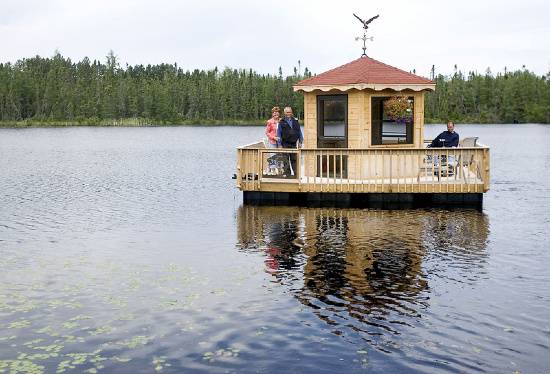
Gene Luoma, 65, designed the vessel to be handicapped accessible. He and his son, Brian, have muscular dystrophy.
The 18-by-18-foot structure rides atop 12 dock floats manufactured in Fergus Falls. The plastic-coated square foam floats measure 4 feet per side and 18"deep. Together, they provide about 15,000 pounds of buoyancy — far more than needed for a 5,000-pound gazebo, but Luoma said his tendency has always been to overbuild.
A 10-foot diameter screen house sits atop the floating deck of the vessel. Luoma has equipped the screenhouse with a table and deck chairs. Beneath the table, he i nstalled a remote-controlled electric trolling motor with 70 pounds of thrust and a fish finder. The vessel lacks a bow or stern, and Luoma uses a fish decoy attached to the shaft of his trolling motor to keep tabs on his direction of travel.
The gazeboat also is equipped with a pair of electric winch anchors at opposite corners. Brian said the anchors are helpful not only for holding the craft in place over a productive fishing hole but also for creating drag, which sometimes assists with navigation.
Luoma and his friends began building the gazeboat in February on the ice of the small lake that fronts his home. The body of water doesn’t have an official name, but the Luomas call it Lake Berniece, in honor of Kathie’s mother, who loved to fish there. The lake is home to a healthy population of crappies, sunfish, largemouth bass and some respectably large northern pike.
Luoma decided to build his floating gazebo in place rather than attempt to lug it into p osition. Hopeful that his rugged rig can withstand the elements, he plans to leave it in the water year-round, through freeze-up and ice-out.
By Luoma’s estimate, he figures he has invested about $8,000 in his gazeboat, including materials, equipment and labor.
Luoma remains unclear about how the authorities will view his creation. It’s on a private lake, and he said he doesn’t know whether it will require a license.
“I guess I’ll find out after this appears in the newspaper,” Gene said with a shrug.
Despite the uncharted waters, Kathie Luoma said she supported her husband’s unusual gazebo plans from the start. She has learned to trust his unconventional thinking.
Luoma has several patents and some lucrative designs to his name. He is the creator of the popular Zip-It, www.zipitclean.com a plastic-toothed strip used to fish hair from choked drains. Since its market introduction about eight years ago, Luoma said several million of the devices have been sold.
Luoma also founded Design Pro Inc, www.designproforms.com a Duluth business that manufactures steel forms used to cast concrete blocks, bollards and all manner of barriers. He sold that business in January of this year, with more than $3 million in annual sales.

To put your logo in the next 12 months of Yachtyakka, just flick me an e-mail.
| Happy
Sailing Steve Alloway |
|||
| Real
Entertainment Ltd Sally-Anne and Steve |
|||
| 18 Te Makiri Rd | Waiheke Island | Auckland 1081 | New Zealand |
| Ph: (+64 9) 3723411 | mob: 021 300300 |